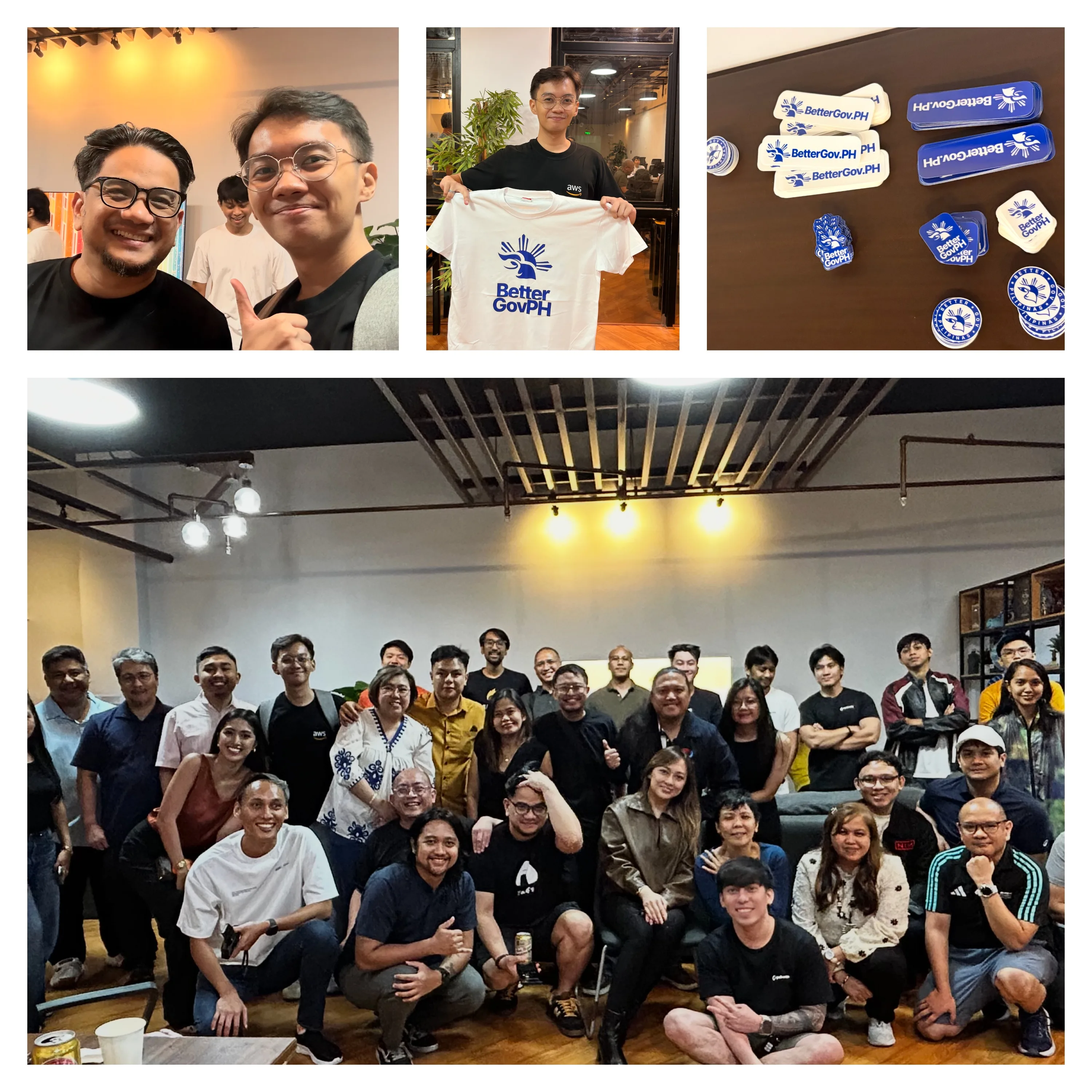
"Ang gastos naman maging dev ngayon"
After almost every talk, someone asks me what AI subscription I use. They expect a product name. Lately, some of them are asking while they are still saving up for a laptop.
I pay for one. It costs $10 a month. The number is not the interesting part.
I studied Computer Science at Mapúa from 2020 to 2023, back when GPT-3-era tools hallucinated often enough that nobody could seriously argue a student needed a paid AI stack to compete. You wrestled with the fundamentals because the model could not reliably carry the work. Three years later, today's agents inspect repositories, plan changes, edit files, and run tests. The barrier to entry has a monthly price.
I was born in 2001. Move that by three years and I am not the person writing this post. I am the one sending the message, asking someone else which subscription will keep me employable.
If everyone else has these tools, can I afford not to?
So how did we get here? How did staying competitive in this field turn into a recurring bill?
Some Students Cannot Even Buy the Starting Line
My budget strategy begins from a privileged position. I own a capable laptop and have stable work after more than two years at GCash. Ten dollars a month does not force me to give up a school expense. Many students do not have that choice.
The 2024 National Information and Communications Technology Household Survey found that high subscription and equipment costs were the leading barriers among Filipinos without internet access. A later Philippine Statistics Authority release reported that only 17.9% of Filipinos aged 10 and above used a computer in 2024.
Those are not university-student-only figures, but they should make the assumptions in our industry uncomfortable. We argue about which premium agent is best while some aspiring developers are still borrowing a laptop, sharing a device with family, or learning from a phone.
How much more can we expect them to pay just to feel employable?
If You Cannot Pay Anything Yet
Then start here, in this order. None of it needs a card on file.
- Learn the fundamentals without an agent first. This is not nostalgia. If you cannot read a stack trace or reason about why a function is slow, an agent will hand you code you cannot evaluate, and reviewers will notice before you do.
- Use free hosted tiers deliberately, not casually. As of August 2026, OpenRouter provides 50 free-model requests per day before any credit purchase. OpenCode Zen currently lists several free coding models, though it labels them limited-time. Codex CLI is included in ChatGPT Free at $0 per month for quick coding tasks, with limits that vary by the model and size of the work. Spend those limits on the tasks you are stuck on, not on boilerplate you could write yourself. Me personally, I have 5 Google accounts that I conveniently switch to when I hit my OpenAI limits.
- Run small models on the hardware you already have. Quantization has made this genuinely practical, and a 7B or 14B model that runs offline is worth more than a frontier model you can only reach three times a day. I wrote up which jobs small local models are actually reliable for in Running Local LLMs With LM Studio.
- Use an open harness so the tooling never becomes the lock-in. Hermes Agent is MIT-licensed and model-agnostic. It talks to hosted providers and to local OpenAI-compatible endpoints equally well, so the same setup follows you from a free tier to your own machine and back. No seat license, no rate limit, no card on file.
- Pay only when a free tier becomes your actual bottleneck. Then pay for one thing.
One honest caveat. If you are sharing a device with family or working from a phone, skip step three. Local inference needs hardware you may not have yet, and pretending otherwise is exactly the kind of advice that makes people feel further behind. The hosted free tiers are your path, and they are enough to start.
Rotating Free Accounts Instead of Switching by Hand
In step two I mentioned switching between five accounts when I hit a limit. Hermes does this automatically. Register multiple credentials for one provider, choose a rotation strategy, and the harness cycles through them without manual switching.
I run fill_first on openai-codex with five free OpenAI accounts: use the first key until its limit is exhausted, then move to the next. The other strategies are round_robin (cycle through keys evenly), least_used (always pick the least-used key), and random.
This is not an OpenAI-only trick. Any provider Hermes supports with a free tier gets the same treatment. I have rotation set up on opencode-zen and openrouter too, multiplying the free runway on each. As of August 2026, the supported provider list includes openai-codex, anthropic, gemini, openrouter, opencode-zen, deepseek, fireworks, qwen-oauth, xai, kimi-coding, and 40 others.
What I Actually Pay For, and Why It Is Only One Thing
The durable idea is the routing, not the receipt: pay for one affordable base, use free tiers carefully, and send each task to the cheapest model that can do it reliably. Not every problem deserves the most expensive frontier model. I also refuse to collect subscriptions like Pokémon badges.
As of July 2026, that principle cashes out like this. I pay for OpenCode Go, which cost $5 for the first month and $10 per month after. It works with OpenCode and compatible agents, so I also connect it to the Hermes Agent desktop app on my MacBook Pro. Inside OpenCode I run GLM-5.2 for planning, then DeepSeek V4 Pro or Flash for execution, sometimes swapping execution to Qwen3.6 or Qwen3.7. For especially hard planning I add GPT-5.6 Terra on the free Codex tier as a second perspective.
Just recently, I got lucky. I joined AMD Developer Hackathon: ACT II with The ODYZEUS, where we built Ani, and received $50 in Fireworks AI API credits. AMD documents the same benefit for approved AI Developer Program members.
That is another route worth checking: hackathons, tech meetups, and conferences sometimes include API or cloud credits. Join for the people and the work. Treat the credits as bonus runway for a project, not a permanent part of your stack.
Every model name in this paragraph will be wrong within a year due to how AI improves quickly every month. The routing rule will not be.
Why Nous Research and Hermes Agent
I started contributing to Hermes Agent because Nous Research describes its mission as creating and proliferating open-source language models, supporting their unrestricted availability, and improving public understanding of them. That is a direction I want to support with more than a star on a repository.
One distinction is worth making. Hermes Agent is not a model. It is a harness. It does not make any frontier model free, and open source does not erase the cost of a laptop, electricity, internet, or hosted inference.
What it does is create more paths: run smaller models locally, share infrastructure, switch providers, inspect the software wrapped around the model, and keep building without being locked into one company's most expensive plan.
My First Merged Contribution Was a Font Picker
Before my first PR, every time I opened the terminal inside Hermes Agent Desktop on my MacBook Pro, my Powerlevel10k prompt showed broken symbols where Nerd Font glyphs should have been. Arrows, branch icons, separators: all rendered as empty boxes or question marks. The terminal worked.
My first contribution to Hermes Agent did not merge through my own pull request. My PR was closed, but the maintainer salvaged my commits into the actual merge with authorship preserved. The work added a profile-scoped terminal font picker to the desktop app: choose an installed Nerd Font from Settings → Appearance, preview the glyphs, and apply the change to interactive and read-only agent terminals without restarting the persistent shell. Locales, documentation, and round-trip tests were all included. After the merge landed, I selected MesloLGS NF and every glyph rendered properly.
A font picker does not lower inference prices. I know.
But access is not only about whether the repository is public. An open tool also has to be comfortable enough that ordinary people install it, configure it, and keep using it. Unfinished is a reason people quietly go back to the paid thing that works.
Thankfully the codebase is in Python, which made it easy to trace how the terminal, the profile system, and the settings UI fit together. That readability is what made the contribution approachable for someone who had never touched the project before.
When my commits landed, I stopped feeling like someone only hunting for the cheapest path for himself. If you want your own first one, I wrote down what I wish I knew before mine.
AI Cannot Become a Membership Club
Paid frontier models are useful, and this is not an argument that AI should cost nothing. It is an argument against treating a wallet full of subscriptions as the price of belonging in software engineering.
So if you are the student in that question, here is the answer I wish someone had given me plainly: you do not need a subscription to start. Learn the fundamentals, spend free limits on the problems that actually block you, run what you can on the machine you already own, and buy exactly one thing on the day a free tier becomes the reason you cannot finish.
The future of AI cannot be pay-to-win. Too many brilliant students are still waiting outside the paywall.